Sunrise Alarm Clocks: What the Light Actually Does
Gradual light alarms promise gentler mornings, but what does the evidence really show, and which features are worth paying for? Here is a level-headed look.

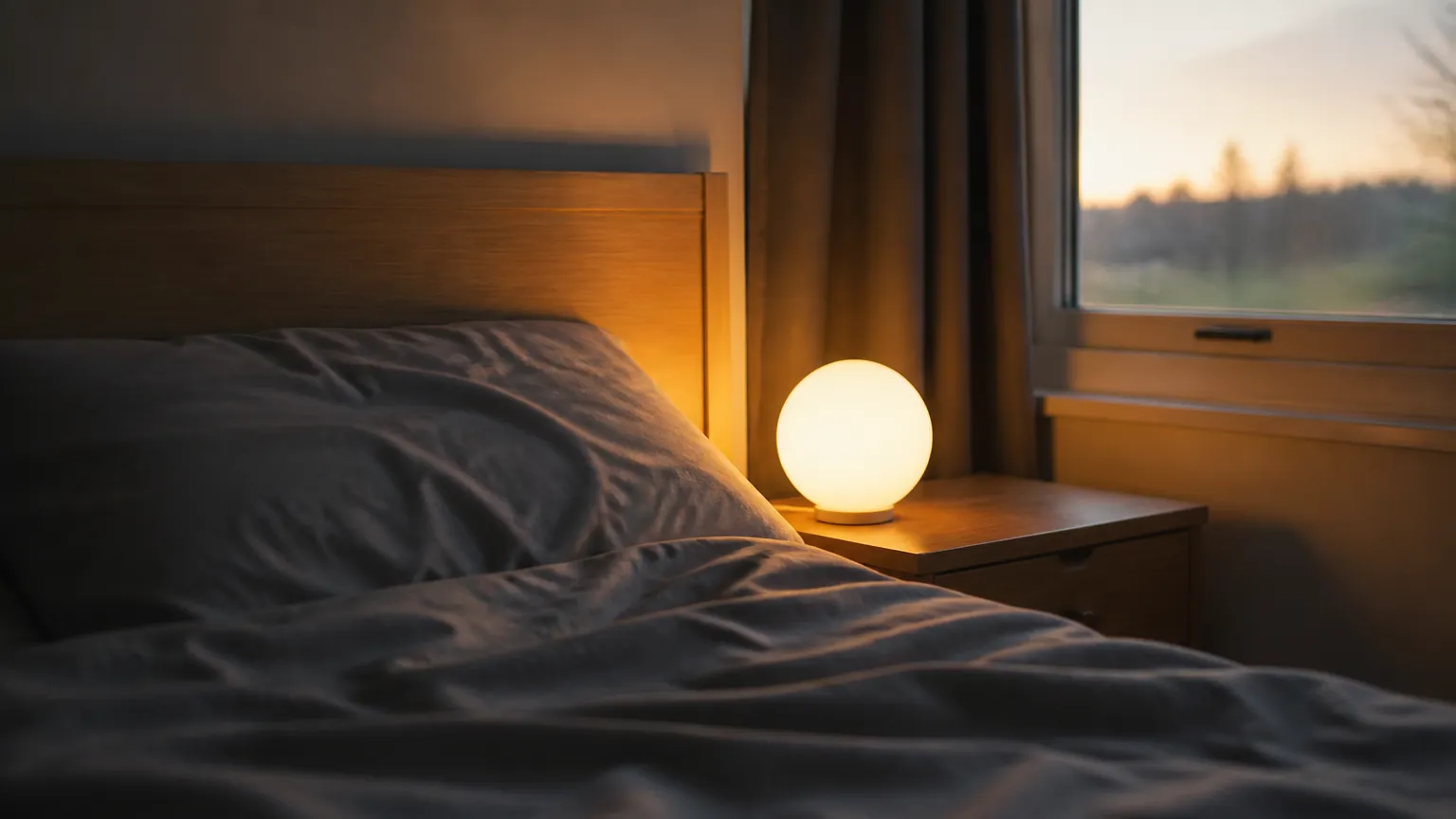
A sunrise alarm clock is a bedside lamp that brightens gradually before your set wake time, usually over 15 to 40 minutes, often finishing with a sound. The idea is that waking to light is kinder than being jolted by a buzzer, and that morning light helps set your body clock for the day. Some of that is well supported by research on how light affects us. Some of it is marketing that runs ahead of the evidence. This guide separates the two, explains what brightness actually means in practical terms, and helps you decide whether one is worth the money.
Light and your body clock: what we actually know
Your sleep and wake timing is governed partly by an internal clock, roughly 24 hours long, that responds strongly to light. Bright light in the morning is the main signal that tells this clock "it's daytime." Getting light early tends to nudge your clock earlier, which can make it easier to wake up and, over time, to fall asleep at a reasonable hour. This is well established and is the basis for using light to treat some sleep timing problems and seasonal low mood.
The important detail is intensity. The light that resets your clock most effectively is bright. Outdoor daylight is enormous compared with indoor lighting: an overcast sky can still deliver several thousand lux, and a sunny day outdoors tens of thousands of lux. A typical living room at night might be 100 to 300 lux. Clinical light therapy boxes are usually specified at 10,000 lux, measured at a stated distance.
Most sunrise alarm clocks do not come close to those numbers at your face. Manufacturers commonly quote peak outputs somewhere between 100 and 400 lux at the pillow, and that figure depends heavily on how far the lamp sits from your head. So if you are hoping for the body-clock-resetting effect of a proper light therapy box, a sunrise clock is usually the wrong tool. Where it may help is as a gentler way to wake, and as a modest, consistent cue that it is morning.
What the research does and doesn't show
There is reasonable evidence that waking up with gradually increasing light can reduce grogginess, the foggy, reluctant feeling in the first several minutes after waking that sleep researchers call sleep inertia. Some small studies have reported that dawn-simulation light is associated with people feeling more alert on waking and sometimes in better mood, and participants often report preferring it to a sudden alarm. That is a genuine, if modest, benefit for many people.
What the evidence does not strongly support is the bigger claims you sometimes see: that a sunrise clock will fix insomnia, dramatically improve sleep quality, or deliver the full therapeutic effect of bright light therapy. The studies are often small, short, and funded or framed in ways that favor the devices, and the effects reported are real but limited. The honest summary is this: a sunrise alarm may make waking feel pleasanter and a little easier, but it is not a treatment for a sleep disorder. If you have persistent insomnia, loud snoring with daytime sleepiness, or you wake unrefreshed no matter what, that is worth raising with a doctor rather than solving with a lamp.
Lux, brightness and why the numbers matter
Lux measures how much light lands on a surface, so the number only means something with a distance attached. A clock that claims "300 lux" tells you little unless you know whether that is measured at the lamp's surface or at where your head rests. A lamp that is bright at its own face can be much dimmer 50 cm (about 20 inches) away on your pillow, because light falls off quickly with distance.
Two practical points follow. First, position matters as much as the specification: the same clock is far more effective close to your head than across the room. Second, you want adjustable brightness. A peak that is great for a dark winter morning may be glaring in summer, and a light that is too bright at the end can wake you with a start, which defeats the point.
Color temperature, measured in kelvin, also matters for how the light feels. A warm amber (around 2,200 to 2,700 K) is calmer for the wind-down at night, while a cooler, whiter light (4,000 K and up) feels more like daylight in the morning. Some clocks shift from warm to cool as they brighten, which is a sensible touch.
Features worth paying for
Prices range widely, from around $25 to $50 for basic models up to roughly $150 to $220 (about £120 to £180, or A$230 to A$340) for well-known premium units. Spending more does not guarantee more lux at your face, so judge features rather than the badge.
- Adjustable peak brightness. The single most useful control. You want to tune the final level to the room and season.
- A genuine sunset or wind-down mode. A gradual dimming at night, ideally with warm color, is arguably as valuable as the sunrise.
- Decent sound. Many include nature sounds or radio as a backup alarm. A small built-in speaker that distorts at volume is unpleasant; look for a sound option, not just light, since light alone may not reliably wake heavy sleepers.
- A readable, dimmable display. A clock face that glows too brightly all night is counterproductive in a bedroom.
- Simple controls. Physical buttons you can find in the dark beat fiddly touch panels and app-only setup.
- A battery backup for the alarm, so a brief power cut does not leave you oversleeping.
App connectivity and smart-home integration are nice-to-haves, not essentials. Be aware that a connected device sends some data to the maker; if that matters to you, check whether core functions work without an account. Data and privacy rules differ by region, with the UK and Australia under their own privacy laws and the US relying more on individual state rules, but as a general habit it is worth reading what an app collects before you sign in.
Running costs and power
These are low-power devices. An LED sunrise clock typically draws only a few watts at full brightness and almost nothing in standby, so the running cost is tiny. As a rough example, suppose it averages 5 watts for one hour a day across sunrise and sunset. That is 5 W × 1 h = 5 Wh, or 0.005 kWh per day, about 1.8 kWh a year. At roughly 17 US cents per kWh that is about 31 cents a year; at about 25p per kWh in the UK, roughly 45p; at around 30 Australian cents per kWh, about 55 cents. In other words, electricity cost is not a reason to choose one model over another.
On power supply: most of these clocks run on low-voltage power through an adapter or USB, so mains voltage differences between the US (120 V) and the UK and Australia (230 to 240 V) are handled by the adapter. Check the plug type and that the unit is rated for your region before buying from overseas, and use the supplied adapter rather than a questionable third-party one.
Who might not benefit
A sunrise clock is not for everyone. If you sleep with a partner on a different schedule, a brightening lamp can disturb them. If your bedroom already gets strong natural light in the morning, you may not need one at all, and good blackout curtains plus simply opening them on waking can do a similar job for free. Very heavy sleepers may wake only to the sound alarm, not the light, so the "gentle" promise may not apply. Shift workers who sleep during the day have the opposite problem and are usually better served by blocking light than adding it.
There are also situations where you should be cautious with bright light generally. Some eye conditions and certain medications increase light sensitivity, and bipolar disorder can be affected by light timing. If any of that applies to you, it is worth a quick word with a clinician before using bright morning light deliberately.
Quick comparison of approaches
| Approach | Typical brightness at your face | Approx. cost | Best for |
|---|---|---|---|
| Sunrise alarm clock | ~100 to 400 lux (varies with distance) | $25 to $220 | Gentler waking, a dark-mornings cue |
| Light therapy box | Up to 10,000 lux at a stated distance | $60 to $200 | Clock-shifting and seasonal low mood, under guidance |
| Natural daylight | 1,000s to 10,000s of lux outdoors | Free | The strongest body-clock signal, if you can get it |
| Open the curtains | Depends on the room and sky | Free | Many people with east-facing bedrooms |
The short version
- Morning light helps set your body clock, but the clock-resetting effect needs real brightness; most sunrise clocks are too dim at your face for that.
- The better-supported benefit is a gentler wake and less grogginess; the stronger claims about curing insomnia are not well evidenced.
- Lux figures only mean something with a distance attached, so position the lamp near your head and choose adjustable brightness.
- Worth paying for: adjustable peak, a true sunset mode, a usable sound backup, a dimmable display, and battery backup for the alarm.
- Skip it if your room already gets strong morning light, and check with a clinician if you have light-sensitive eyes, relevant medication, or bipolar disorder.
Tom Ashworth
Sleep, Health Tech & Travel writer · Manchester
Tom writes about sleep and health tech, travel gadgets and outdoor gear. He looks past spec sheets to how a gadget fits into everyday life, and he is wary of health claims that go beyond the evidence.
Keep reading
White Noise Machines vs Sleep Apps: Which Is Worth It?
White noise, pink noise, brown noise and the apps that promise better sleep: here's what the evidence supports and where your money actually goes.
Best Sleep Tracker: Smart Ring vs Smartwatch Compared
Rings and watches both track your nights, but they suit different sleepers. Here is how comfort, battery and accuracy really compare before you buy.
What Is an OBD2 Scanner, and Do You Actually Need One?
That little socket under your dashboard can tell you why the check engine light is on. Here's what a scanner reads, what it costs, and who really benefits.
Comments
No comments yet. Share your experience or ask a question.